Feast
Dinner and folk show
All-you-can-eat Polish dinner
- Length2.5 to 3 hours
- WhereCholerzyn, outside Krakow
- Reviews1,770
Guides
Language
Currency
See what is open€37 and up · cancel at no chargeDecide with ease
Quick summary
Polish food is good: hearty, sour and smoky, it ranks high among world cuisines, and Krakow holds a European gastronomy title.
The evidence
Two questions, one Polish evening
Say how you like to eat and where, and the matching tasting appears with its starting price.
Suited to you
from €43
2.5 to 3 hours at a restaurant in Cholerzyn, with an all-you-can-eat Polish dinner and a folk show.
Suited to you
from €46
1.5 to 2 hours: a folk show and a 3-course dinner at the historic café.
Suited to you
from €67
3 hours with a full traditional Polish dinner, meeting at ul. Dietla 7.
Suited to you
from €37
2.5 to 3 hours of pierogi, zapiekanka, bigos and Polish shots with an English-speaking guide.
Suited to you
from €40
1.5 to 2 hours of Krakow street food with a guide, up to 15 people.
Is Polish food good, or just filling? Expect sour soups, slow stews, dumplings, smoked cheese and Viennese cakes. Here is what Polish food is like, where it comes from and how healthy it can be.
Editorial team, krakowfoodtour.click · Updated November 9, 2026 · Takes 8 min
The essentials
Yes, and the outside world has started to agree. In the 24/25 TasteAtlas Awards, Polish cuisine ranked 11th among the 100 best cuisines of the world, the Polish Tourism Organisation reports.1 Its top dishes on that list read like a market stroll: honey, strawberries, pierogi, cheesecake, babka, broth, kopytka, zapiekanka and bigos.9 So if you are wondering whether Polish food is good, the answer depends less on the cuisine than on where you eat it.
Krakow makes a strong case. The European Academy of Gastronomy gave the city the title European Capital of Gastronomic Culture in 2019, and the city has built on it since.8 More than 20 restaurants from Krakow and its surroundings have earned a Michelin distinction in recent editions, the regional tourism portal reports.10 That is a long way from the grey reputation some travellers still carry, and it means a visitor can eat very well at every price point, from a canteen counter to a tasting menu.
The reputation problem has a history. VisitMałopolska explains that the post-war decades of the People's Republic standardised cooking and spread mass-produced food.11 Many flavours have since come back, and chefs now keep reworking the classics.12 If your idea of Polish food comes from a bad plate abroad, give it another chance in Krakow. The ingredients, the bakers and the cooks here are the reason the question has a better answer today.
Light or heavy
| Dish | What it is | Weight |
|---|---|---|
| Red barszcz | Beetroot soup | Light26 |
| Sauerkraut and pickles | Fermented vegetables | Light6 |
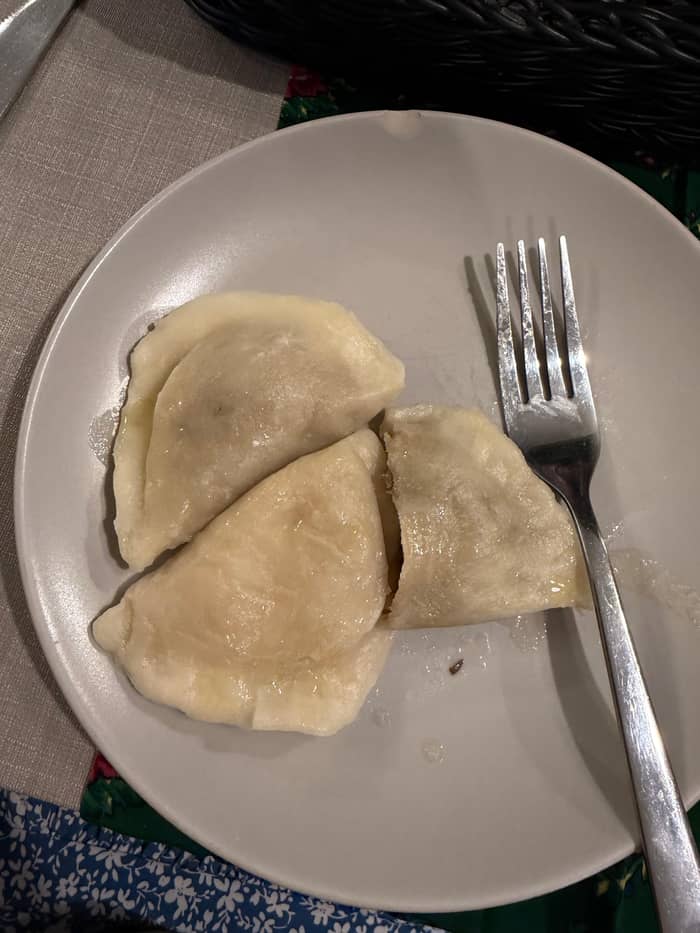
| Pierogi ruskie | Potato and cheese dumplings | Medium22 |
| Placki | Crispy potato pancakes | Medium27 |
| Bigos | Sauerkraut and meat stew | Filling3 |
| Kotlet schabowy | Breaded, deep-fried pork chop | Filling7 |
Dish descriptions from the Polish Tourism Organisation and the National Centre for Nutrition Education; the weight column is our guide.2,28
So what is Polish food like on the plate? Start with sourness. Soups made from tomato, sour rye, cabbage and cucumber fill the menu, with broth crowned the king of tradition.2 Pickled cabbage, made in Małopolska for centuries, has a clean sour taste and a creamy yellow colour.17 Expect a sharp, refreshing edge in many dishes, even the heavy ones. It balances the richness of pork, butter and cream, and it is what makes Polish cooking taste different from its neighbours.
Next comes comfort. Bigos combines sauerkraut, several meats and spices and gets better with each reheating.3 Potatoes play a big role, from crispy pancakes to small dumplings, and the breaded pork chop has been the Sunday dinner of Polish homes for decades.18,7 This is food built for cold winters and long family lunches. It fills you up, and in a good kitchen it does so with real flavour rather than bulk.
Then there is baking and sweetness. Bread is serious here: Krakow's own obwarzanek is parboiled before it is baked, and Prądnik bread is a dark rye sourdough.19,20 On the sweet side, the Polish Tourism Organisation's pick for a finale is cheesecake, poppy seed cake or apple pie.21 Sweet fillings appear where you might not expect them, in pierogi with cottage cheese or fruit.22 The overall picture is hearty, sour, smoky and sweet in turn, and rarely spicy in the chilli sense.
Polish food is a meeting of kitchens, and Krakow shows it plainly. VisitMałopolska describes a region where Polish cooking blends with Austrian, Hungarian, Mediterranean, Turkish, Jewish and Asian strands.32 For Krakow specifically, it names Austro-Hungarian traditions as the strongest influence and adds Jewish cooking, along with Ukrainian and Armenian kitchens brought in through trade.4,5 Cheesecake, Sacher cake and pischinger came straight from Viennese tables.16
The royal court left its mark too. At Wawel, meats and sauces were perfumed with costly nutmeg, pepper, ginger and cloves.13 Queen Bona Sforza is credited with bringing fennel, spinach, artichokes, broccoli and Mediterranean herbs to the royal table.14 The region also produced early cookbooks: Kuchmistrzostwo, the first Polish collection of recipes, published around 1540 or 1550, and Compendium ferculorum by Stanisław Czerniecki, printed in Krakow in 1682.33,34
Jewish Krakow added the bagel. A city archives record from 1610 describes a golden-baked bun with a hole given by the Jewish community to new mothers.15 The Kazimierz bagel was entered on Poland's list of traditional products in 2008.35 Add the mountain shepherds' smoked oscypek and the peasant staples of potatoes, groats and cabbage, and you have a cuisine that is anything but plain, even when it looks simple on the plate.
Taste a full spread
Feast
All-you-can-eat Polish dinner
In the city
Folk show and 3 courses
On foot
Walk and graze
Is Polish food healthy? Parts of it are very good for you. The National Centre for Nutrition Education names fermented foods, including kefir, some yogurts, curd cheese, pickled cucumbers and sauerkraut, as a valuable source of lactic acid bacteria.6,28 Those are everyday Polish foods, not health-shop extras. A side of sauerkraut or a few pickles with lunch is normal here, and it brings that sour crunch alongside the nutrition.
Beetroot is another quiet win. The nutrition centre calls it a cheap source of many important nutrients, including anthocyanins, and notes that Poles use it most often in red barszcz.38,26 Per 100 g it lists 348 mg of potassium, 41 mg of calcium and 10 mg of vitamin C.23,24,25 A bowl of barszcz is light, warming and colourful, and it makes an easy starter before a richer main course. Beetroot salads and beetroot sauces turn up on canteen menus too.
The healthy side also includes groats, cabbage and seasonal vegetables. Kaszka krakowska is made from broken buckwheat grains, and the royal kitchen once cooked it sweet with milk and raisins.39 National guidance spreads food across 4-5 meals with 3-4 hours between them, rather than a few heavy sittings.40 Eat the Polish way, with soup first and a modest main, and the cuisine is far kinder to the waistline than its reputation suggests.
Price a Polish dinner
Set your group size to compare dinners and food walks.
Review 4 options
Set your group size to compare dinners and food walks.
≈
View≈
View≈
View≈
ViewFrom-prices on GetYourGuide, shown at the ECB reference rate. Your exact price is confirmed during booking.
Who shaped the menu
The royal table
Nutmeg, pepper, ginger and cloves scent meats and sauces at Wawel.13
Queen Bona
Fennel, spinach, artichokes and herbs reach the royal table.14
1610
A city record shows a ring bun gifted after childbirth.15
From Vienna
Cheesecake, Sacher cake and pischinger come from Viennese tables.16
Post-war years
Cooking is standardised and mass-produced food spreads.11
Today
Chefs create new versions of classic Polish dishes.12
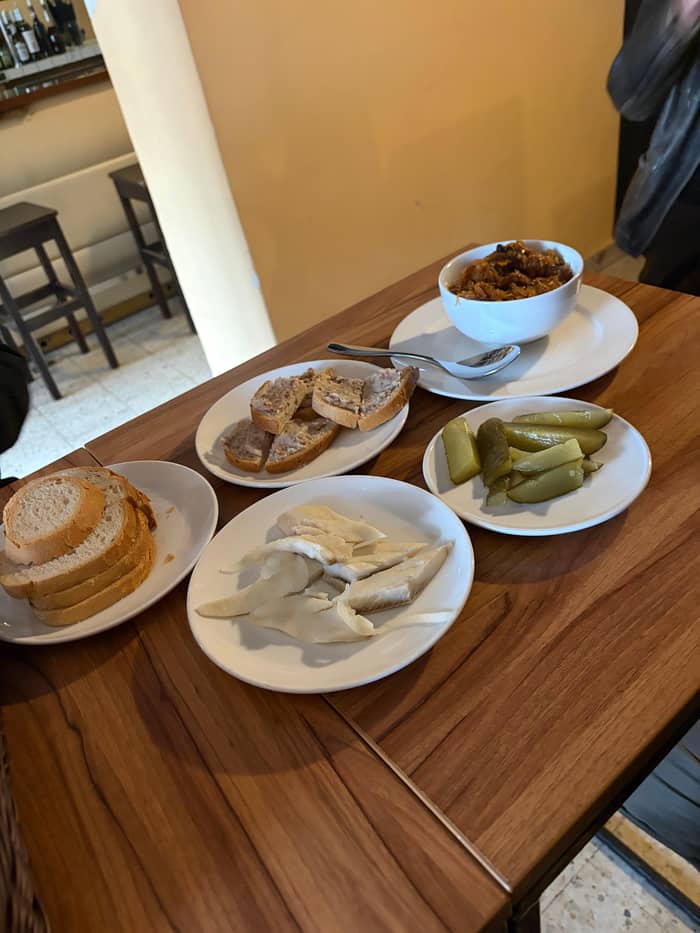
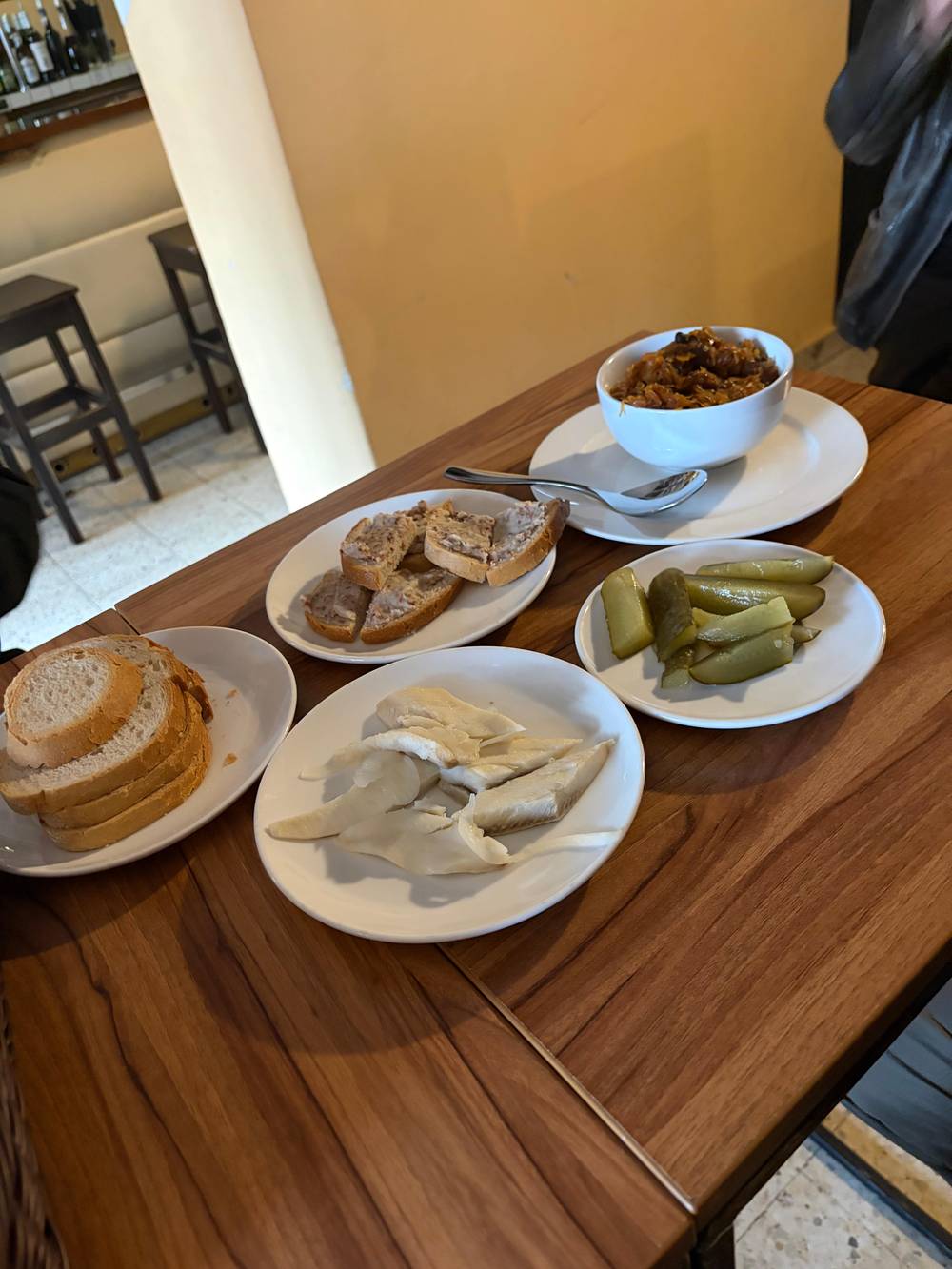
Some dishes are heavy, and it is fair to say so. The breaded, deep-fried pork chop is a Sunday classic, and bigos packs several meats into the pot.7,3 At the Christmas market, bread spread with homemade lard comes alongside borscht, and grilled sausages are everywhere.41,42 The site's own food walk includes smalec, a pork spread, among its tastings. Enjoy these as treats rather than as the whole menu.
Eating lighter is easy if you order with intent. Choose barszcz or żurek as a starter, then pierogi with potato and cheese or cabbage and mushrooms rather than meat.29,22 Ask for salads and pickles on the side. Milk bars, which by legal definition serve dairy and vegetable dishes through the day, offer meat-free plates at modest prices.43 The cooking can be simple there, but you will eat real home-style food rather than tourist portions.
Timing helps as well. The nutrition centre advises finishing eating 2 to 3 hours before bed and keeping gaps between meals under 4 hours.37,36 It also notes a common Polish belief that supper must be over by 18:00, which it calls a myth.44 On a food tour, pace yourself: taste each dish, skip the bread you do not need and drink water between the shots, and you will finish the evening comfortable rather than stuffed.
Video
National Geographic on YouTube · The video only starts loading on your tap.
The heart of Małopolska is where Polish culture mixes with Austrian, Hungarian, Mediterranean, Turkish, Jewish, Asian and other cultures
Eat it well
Sweetness turns up in unexpected places. Pierogi can be filled with sweet cottage cheese or fruit, and in some regions potato pancakes are eaten with sweet cream and sugar.22,27 The soups are sourer than many expect, from żurek to the clear beetroot barszcz. Then there is the bread: a ring of dough boiled before baking, the obwarzanek, is the city's best-known snack.45 None of these matches the stereotype of heavy, bland Eastern European food.
Another surprise is the street food. The zapiekanka is a halved baguette or Krakow weka roll topped with mushrooms and grated cheese, traditionally with ketchup.30,46 Maczanka, pork in a roll with caraway sauce, is called the ancestor of today's hamburger by the regional tourism portal, and it was already served in 1892 at a corner of Grodzka Street.47,48,49 Krakow's squares now host food trucks too, among post-industrial buildings.50
The last surprise is quality at the top. Bottiglieria 1881, where diners can wait up to 90 days for a table, cooks Polish regional food with a modern twist and has served pierogi with artichoke and truffle.51,52 The gap between a milk bar plate and a tasting menu is wide, yet both draw on the same roots. That range is the best argument for Polish food: it rewards curiosity at every level.
The surest way to judge Polish food is to try a lot of it in a single sitting. One option is a Polish folk show with an all-you-can-eat dinner at a restaurant in Cholerzyn, outside Krakow, lasting 2.5 to 3 hours, from €43, with 1,770 reviews. For a sit-down meal in the city, a folk show with a 3-course dinner at the historic Jama Michalika café runs 1.5 to 2 hours, from €46.
If you prefer to walk and graze, the site's own tipsy food tour, 2.5 to 3 hours long with a guide who speaks English, has tastings that take in herring, pickles, smalec, bigos, zapiekanka and pierogi, from €37. A full traditional Polish dinner and folk show lasts 3 hours, from €67, and meets at the bus stop at ul. Dietla 7. Each gives you a broad sample rather than a single dish.
Whichever you pick, judge Polish food on its own terms, and give it more than a single meal. A plate in a canteen, a bowl at a market and a dinner with a show will each show you a different side of the same kitchen. Taste the sourness, the smoke of oscypek, the comfort of a good broth and the precision of a parboiled bread ring. Then decide whether it is good. The ranking, the gastronomy title and the city's Michelin count all say it is, but your own fork is the real test.1,8,10
FAQ
Sources
Hungry for Krakow? Ask a real person here.