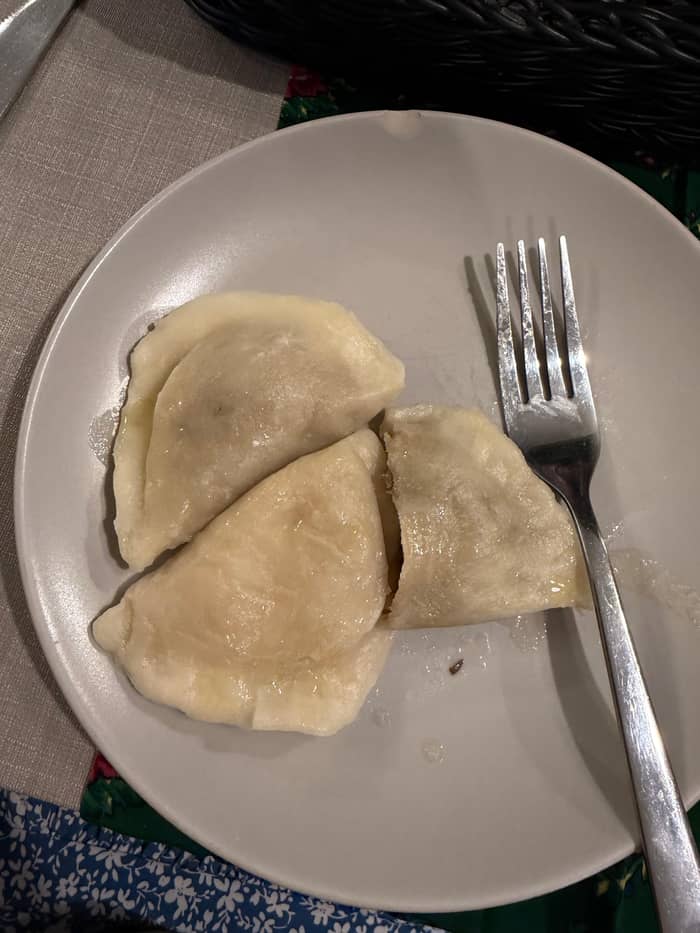
Carnival
Fat Thursday
Doughnut day
- EatPączki
- WhenBefore Lent
- WhereBakeries
Guides
Language
Currency
See what is open€37 and up · cancel at no chargeHands-on checklist
Preparation · 8 items
Work through the list and tick items. Progress is saved on this device.
0 / 8 ready
All set. Only the start time and your group size are left to choose.
Hold a seatWhat time do Polish people eat dinner, and is it lunch or supper? Here is the Polish day of meals, from breakfast to kolacja, and the food calendar from Fat Thursday to Christmas Eve.
Editorial team, krakowfoodtour.click · Updated November 9, 2026 · Takes 8 min
The essentials
What time do Polish people eat dinner depends on which meal you mean. The Polish day has a breakfast, śniadanie, a main hot meal, obiad, and a supper, kolacja, which the national nutrition centre describes as the last meal of the day.4 If you expect a late, big dinner, note that the Polish rhythm puts the big plate earlier and keeps the evening meal lighter. In Krakow you can eat either way.
The official advice is clear. The National Centre for Nutrition Education recommends 4-5 meals a day, eaten every 3-4 hours, and gaps between meals of no more than 4 hours.1,11 It also says the last meal should come 2 to 3 hours before sleep.5 It even notes that many people still believe supper has to be finished by 18:00, a belief it calls a long-disproved myth.12 That belief tells you something about Polish habits.
Older records point the same way. A monograph on the Chrzanów county, quoted by the regional tourism portal, describes families eating breakfast at 9 in the morning in winter.13 The same source puts lunch at noon, with cabbage and lard, barley groats or peas, and supper at 5 o'clock, of potatoes with cabbage.14,15 Village life has changed, but the shape of the day, with the main meal in the middle and a light supper, is still the one to plan around.
The food year
| When | Occasion | On the table |
|---|---|---|
| Carnival | Fat Thursday | Pączki doughnuts6 |
| Holy Saturday | Easter basket | Egg, horseradish, cake24,25,26 |
| Easter Monday | Emmaus fair | Pretzels, gingerbread hearts27 |
| 3 May | Long weekend | Barbecued sausages28,29 |
| August | Pierogi Festival | Seasonal pierogi30 |
| September | Mushroom season | Bigos, soup, pierogi31 |
| 24 December | Christmas Eve | Barszcz, pierogi, carp32,8 |
Dates and dishes from the Polish Tourism Organisation, VisitMałopolska, the National Heritage Board and the national academic exchange agency.32,33
So what do Polish people eat for breakfast? The nutrition centre's own example is 3 spoons of oats with nuts and milk, plus a sandwich with cold meat and a tomato and cucumber salad.17 For children it suggests porridge with fruit or a sandwich with vegetables before they leave home.18 Bread, dairy, cold meats and fresh vegetables are the base, and breakfast should supply 25-30 percent of the day's energy.19
Then comes a second breakfast. The nutrition centre calls drugie śniadanie an important meal for schoolchildren and recommends eating it together with the teacher during a set breakfast break.3,20 For adults it can be a sandwich at work or a mid-morning snack. In Krakow, the classic mid-morning bite is an obwarzanek from a street cart, best eaten warm.21 It fills the gap between an early breakfast and the later obiad.
Krakow has a long tradition of eating early. The EU file for the obwarzanek records that it was once sold from stalls opening before 6 AM, so that people could buy freshly baked goods first thing.22,23 Breakfast should be eaten within 2 hours of getting up, the national guidance adds.2 If you want to eat like a local, start with bread, curd cheese and vegetables at your hotel, and save the sweet pastries for later in the day.
Obiad is the hot main meal, and it is built in courses. A soup comes first, then a main dish, often meat with potatoes and a salad. The Polish Tourism Organisation names the breaded pork chop as a typical main component of a Polish lunch and a fixture of Polish Sunday lunches.37,16 Schools serve obiad too, as school lunches.38 A proper obiad leaves you full until evening, and that is the point of it.
Soup is not optional in a traditional obiad. Broth is called the king of Polish soups, with tomato, sour rye, cabbage and cucumber close behind.39 Żurek and red barszcz are the classics to try.40 At a milk bar, which by law sells dairy and vegetarian meals all day, a soup and a plate of pierogi make a cheap obiad at any hour.41 In a restaurant, look for a daily set of soup and main course at lunchtime.
On Fridays, fish has a long tradition. The regional tourism portal notes that when Friday came round, fish was indispensable on the tables of Galicia.42 On Sundays, the pork chop rules. Between them, the week has its own small rhythm. Visitors can join it easily: eat your largest meal in the middle of the day, and you will find the evenings free for a lighter kolacja or a food walk.
Plan by the calendar
Your travel dates decide the festive dishes you can try.
If I visit in carnival
Pączki on Fat Thursday
The day is celebrated with filled doughnuts.6
If I visit at Easter
The Market Square fair
Soup, dumplings and lard on bread.34
If I visit in August
The Pierogi Festival
Seasonal pierogi such as blueberry, on the dates of that year.30
If I visit in September
Mushroom dishes
Forest mushrooms go into bigos, mushroom soup and pierogi in autumn.31
If I visit in December
The Christmas Market
Grilled sausages, oscypek and bread with lard and borscht.35,36
Three feasts
Carnival
Doughnut day
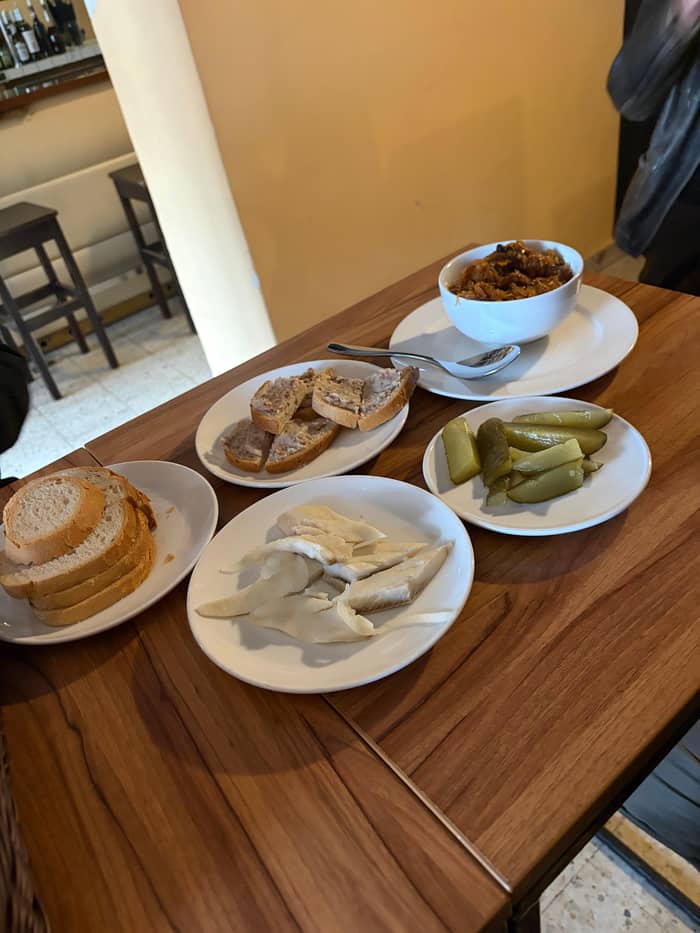
Spring
The blessed basket
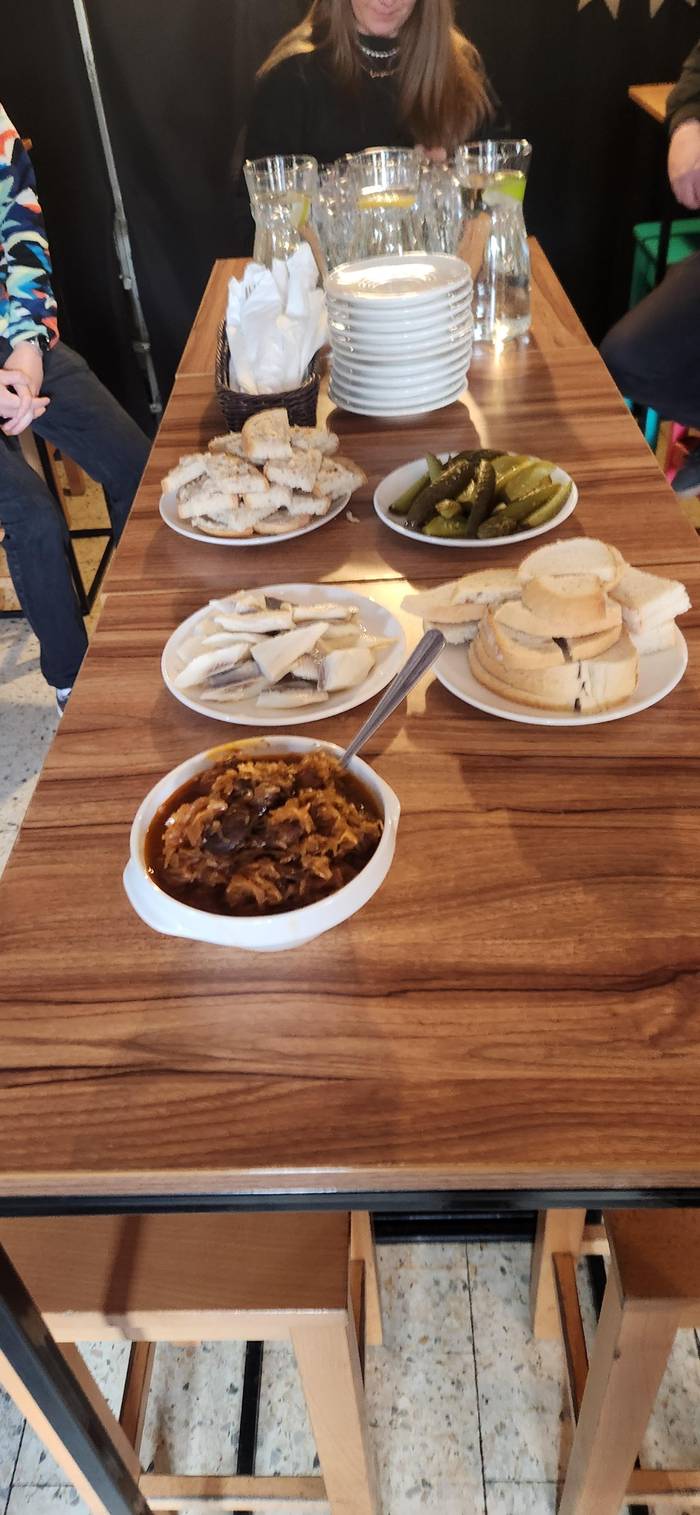
Winter
The meatless supper
Kolacja is supper, the last meal before bed.4 At home it is usually lighter than obiad: bread, cheese, cold meats, salads, eggs or a warm leftover. The nutrition centre's advice on its timing is practical: eat it 2 to 3 hours before you sleep.5 It also calls the idea that supper must be eaten by 18:00 a myth.12 In other words, there is no fixed hour, only a sensible gap between the plate and the pillow, and a light plate suits an evening of walking.
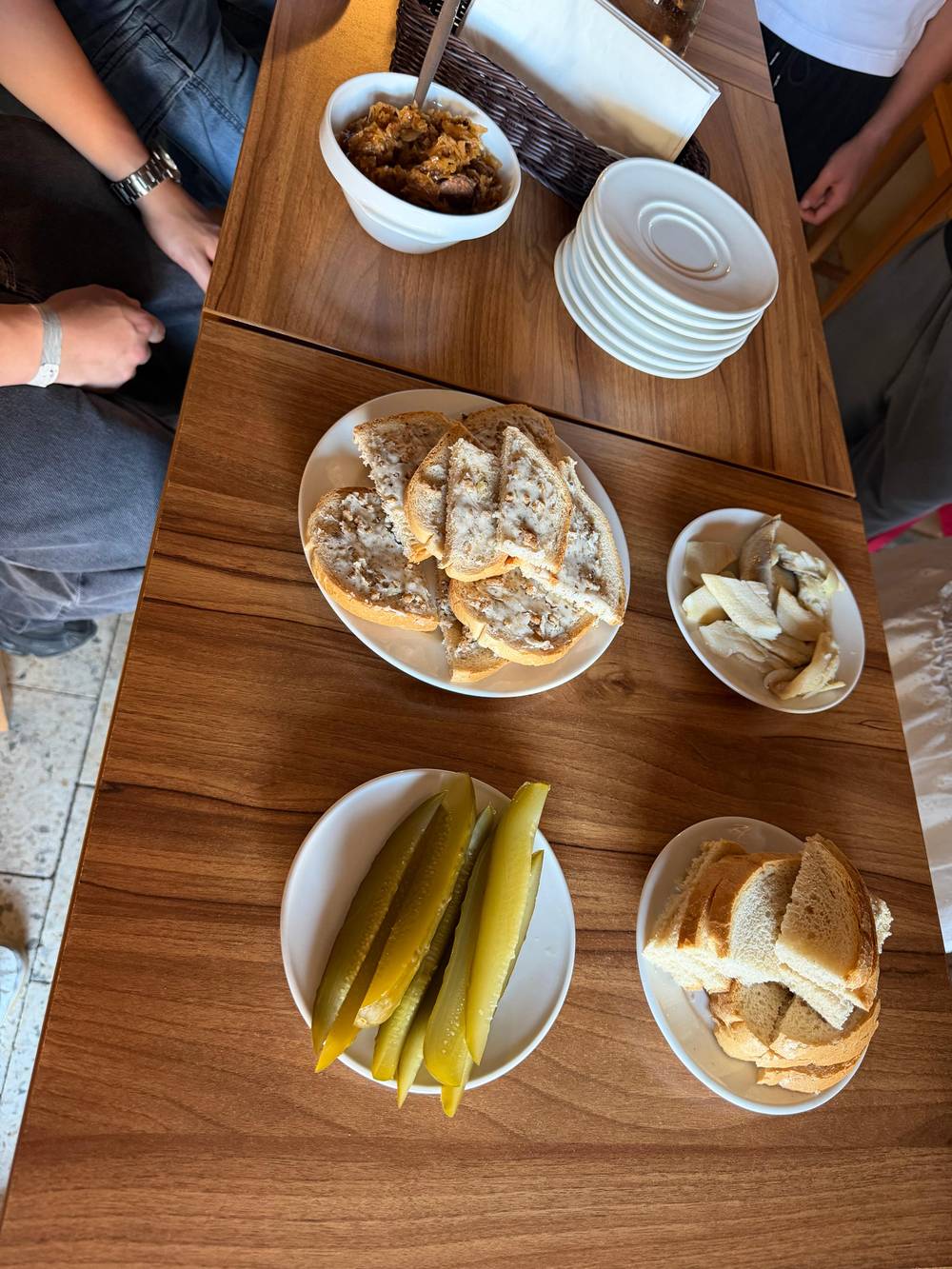
For visitors, kolacja is when the city's evening food life starts. The site's own tipsy food tour has start times of 13:30, 14:30 and 17:30, and its tastings of pierogi, zapiekanka, bigos and pickled herring can stand in for an evening meal. The Jama Michalika café, a historic Krakow address, hosts a folk show with dinner in 3 courses over 1.5 to 2 hours, from €46. Either makes a festive kolacja.
Late at night, Krakow has its own supper tradition. Near the Hala Targowa market hall, sausages sizzle over beechwood at the blue van right through the night.43 Plac Nowy is famous for the zapiekanka, mushrooms and cheese baked onto a split roll.44,45 Neither is a textbook kolacja, but both show how flexible Polish evening eating can be once the obiad is behind you. Pick the supper that suits your day, and keep it modest if lunch was large.
The Polish day
The food year starts in carnival. The Polish Tourism Organisation mentions Krakow's culinary events inspired by Zapust, the carnival.46 Its high point is Fat Thursday, Tłusty Czwartek, when Poles eat pączki, filled doughnuts.6 Spring officially begins on 21 March, the tourism organisation notes, and Easter follows with its own table.47,48 Lent once shaped baking too: in the Middle Ages, the obwarzanek was baked only during Lent.49
Easter food starts on Holy Saturday, when families take baskets of food to be blessed.7 The regional tourism portal lists the symbols: horseradish for strength and health, the egg for life, and cake as a reward after the fast.25,24,26 Cheese, cold meat and butter were also blessed.50 On Easter morning, the household shares the egg with good wishes at the Easter breakfast.24 It is a festive breakfast, and the blessed food from the basket is what goes on the table.
Krakow adds its own Easter events. Its Market Square fair feeds the crowds with soup and dumplings, and blesses baskets too.34,51 Easter Monday is Wet Monday across Poland, and in Krakow it is also Emmaus, a fair at the Norbertine convent known for indulgence pretzels and gingerbread hearts.52,53,27 Poppy seed cake appears at Easter as well as Christmas, full of dried fruit and scented with almond and orange peel.54
Video
TVP WORLD on YouTube · The video only starts loading on your tap.
By tradition, 12 meatless dishes are prepared, symbolising the 12 apostles or the 12 months of the year.
Spring ends with smoke. Since 1990, when the national holiday on 3 May was restored, outdoor barbecues have become a Polish custom over the May long weekend.28 Families grill sausages and other meats with friends.29 Summer then brings fruit and festivals. The regional tourism portal lists Krakow's Pierogi Festival among its culinary events, with seasonal fillings such as blueberries, and in the edition it describes it ran from 11 to 15 August.55,30,33
Late summer has its sweet side. At the end of the summer season, the Krakow Honey Harvest takes place on Wolnica Square, according to the regional portal.56 Oscypek, the smoked sheep cheese, is made every day from May to September, so the summer markets have it fresh.57 It is the season to eat outdoors, from market benches to café terraces, and to choose fruit pierogi over the heavier winter fillings.
Autumn belongs to mushrooms. The Polish Tourism Organisation calls mushroom picking a cherished tradition, particularly in September, and lists bigos, mushroom soup and pierogi among the dishes they go into.58,31 Cabbage is pickled for the winter, as it has been in the region for centuries.59 By November, menus turn heavier again, with stews and soups back in favour, and the city starts looking towards Christmas and its markets.
What do Polish people eat for Christmas dinner? The main event is the supper on Christmas Eve, Wigilia, on 24 December.32 The National Heritage Board describes it starting when the first star appears, with hay under a white tablecloth.9,60 By tradition, 12 meatless dishes are prepared, for the 12 apostles or the 12 months.10 Supper begins with prayer and the sharing of the opłatek wafer.61
The menu varies by region but has a core: barszcz with uszka, cabbage with peas, pierogi and fish, above all carp.8 Poppy seed and dried fruit stay on the table as a remembrance of the dead.62 In Małopolska, carp from Zator is still a popular Christmas Eve dish, best served with plum compote.63 The nutrition centre even publishes a wholegrain recipe for Christmas Eve pierogi filled with sauerkraut and mushrooms.64
An extra place is set for an unexpected guest.65 The Minister of Culture added these customs to the national register of intangible cultural heritage.66 In Krakow, the Christmas season starts on the first Thursday of December, and the Christmas Market on the Main Square lasts about a month.67,68 If you visit in December, eat at the market and look for Christmas Eve dishes on restaurant menus.
FAQ
A sample breakfast from the nutrition centre is oats with nuts and milk, and a sandwich with cold meat and salad.17
A mid-morning meal, which the nutrition centre calls important for schoolchildren.3
Tradition calls for 12 meatless dishes, for the 12 apostles or the 12 months.10
Tłusty Czwartek is celebrated with filled doughnuts called pączki.6
Sources
Hungry for Krakow? Ask a real person here.